Every Picture Is a Compromise
Lessons from the Also-rans
Most photography websites show the photographer's very best work. Wonderful. But that's not the full story of a creative life. If we want to learn, we'd better pay attention to the images that aren't "greatest hits" and see what lessons they have to offer. Every picture is a compromise — the sum of its parts, optical, technical, visual, emotional, and even cosmic – well, maybe not cosmic, but sometimes spiritual. Success on all fronts is rare. It's ok to learn from those that are not our best.
This is a series about my also-rans, some of which I've been able to improve at bit (i.e., "best effort"), none of which I would consider my best. With each there are lessons worth sharing, so I will.
|
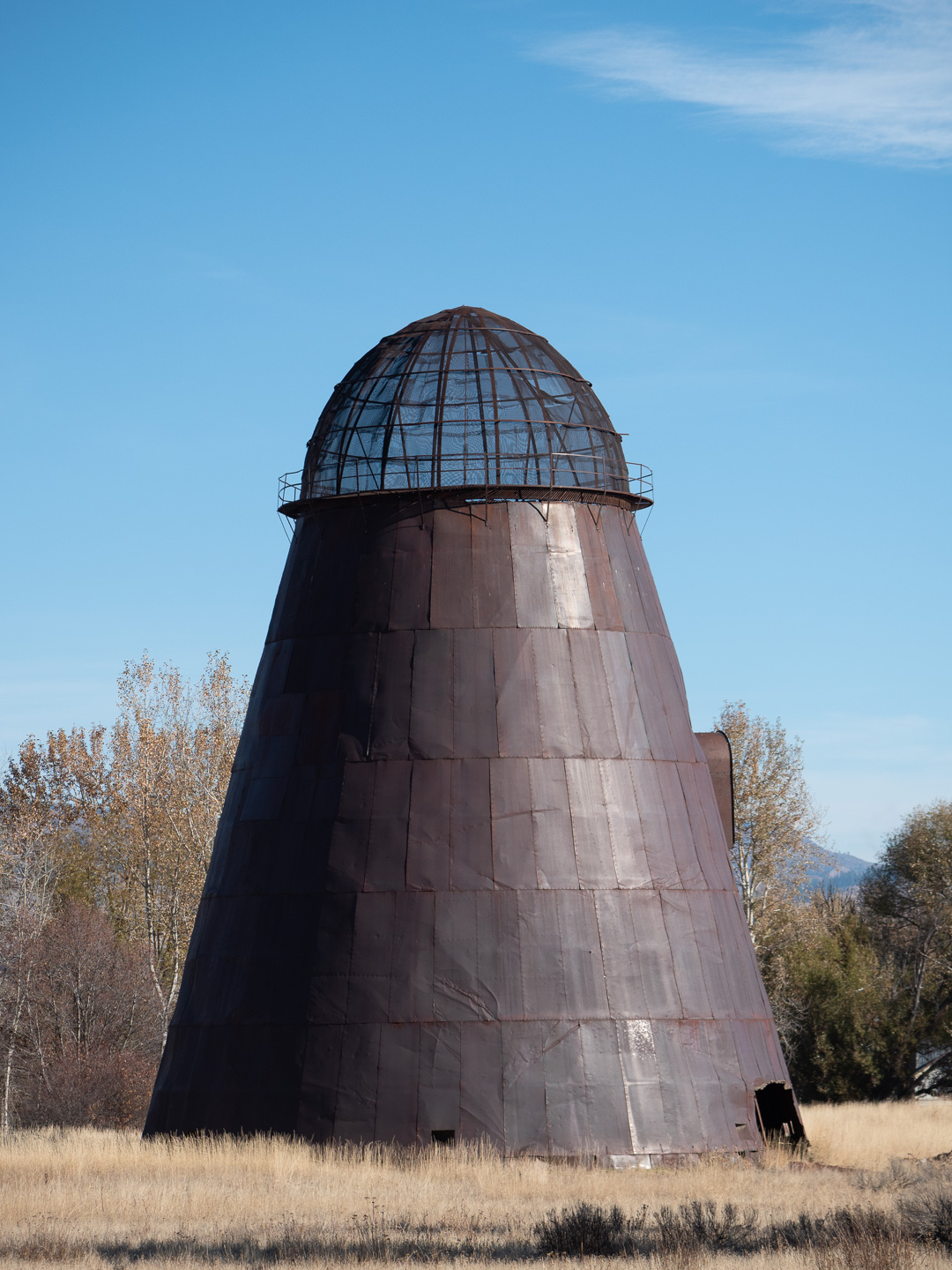
Original digital capture
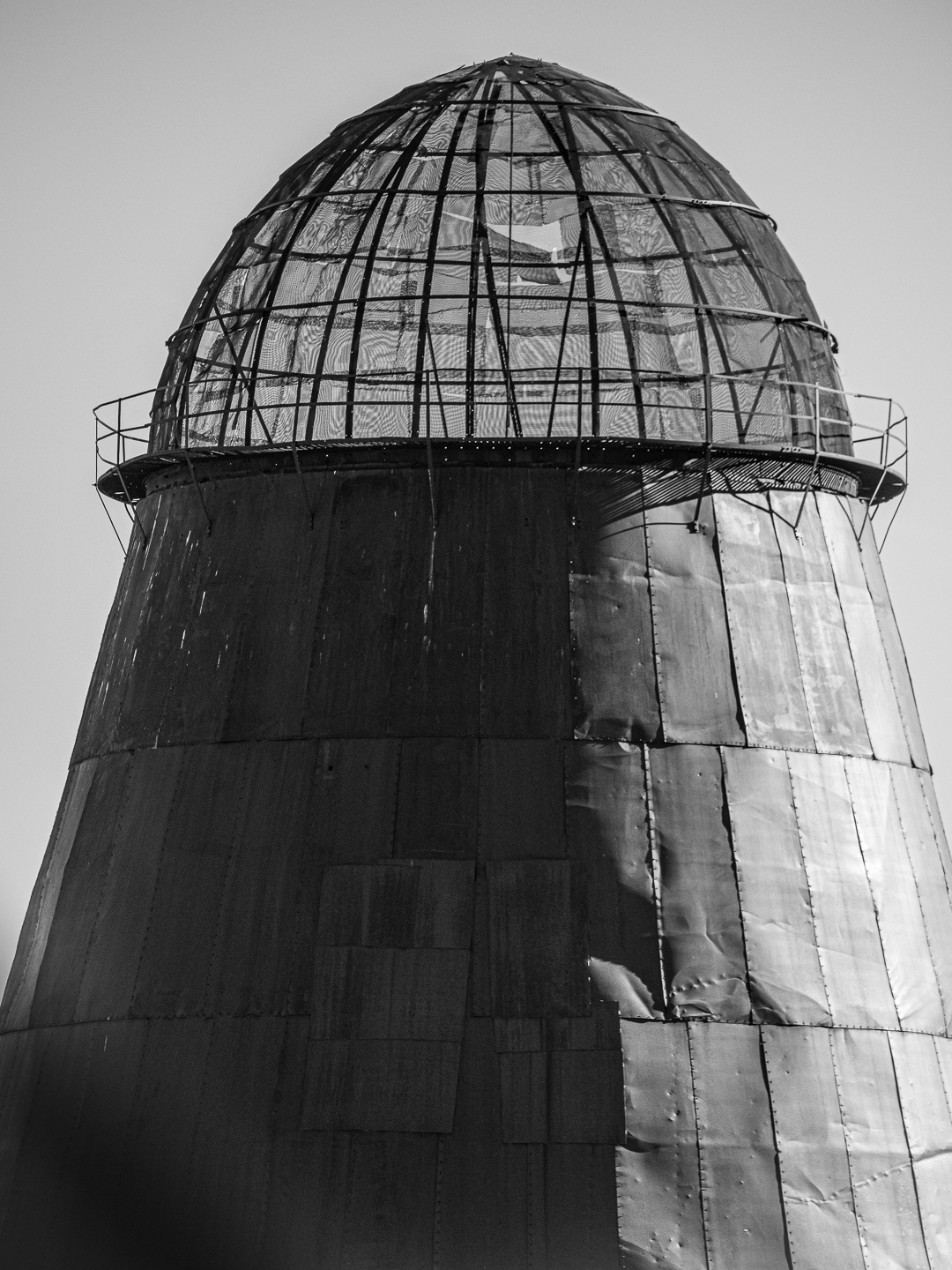
What I saw that I liked:I'll bet that a lot of you have no idea what this is. It is a sawdust burner that is a regular feature of early logging areas in the west. Most of them have long ago been torn down, but every once in a while I see one. What I don't like in the picture:The version above is a picture of the entire thing, but is that really necessary? Over half of the area of the image is not the thing I was photographing. What I learned:Sometimes context is important. In this case, I was happy to sacrifice context to the details of the sheets of metal and details of its construction. In particular, in the closer view at left, the top is clearly a screen where that isn't readily visible in the smaller version above. What is important in a picture? Find that and eliminate the rest. |