Every Picture Is a Compromise
Lessons from the Also-rans
Most photography websites show the photographer's very best work. Wonderful. But that's not the full story of a creative life. If we want to learn, we'd better pay attention to the images that aren't "greatest hits" and see what lessons they have to offer. Every picture is a compromise — the sum of its parts, optical, technical, visual, emotional, and even cosmic – well, maybe not cosmic, but sometimes spiritual. Success on all fronts is rare. It's ok to learn from those that are not our best.
This is a series about my also-rans, some of which I've been able to improve at bit (i.e., "best effort"), none of which I would consider my best. With each there are lessons worth sharing, so I will.
Previous image | Next image |
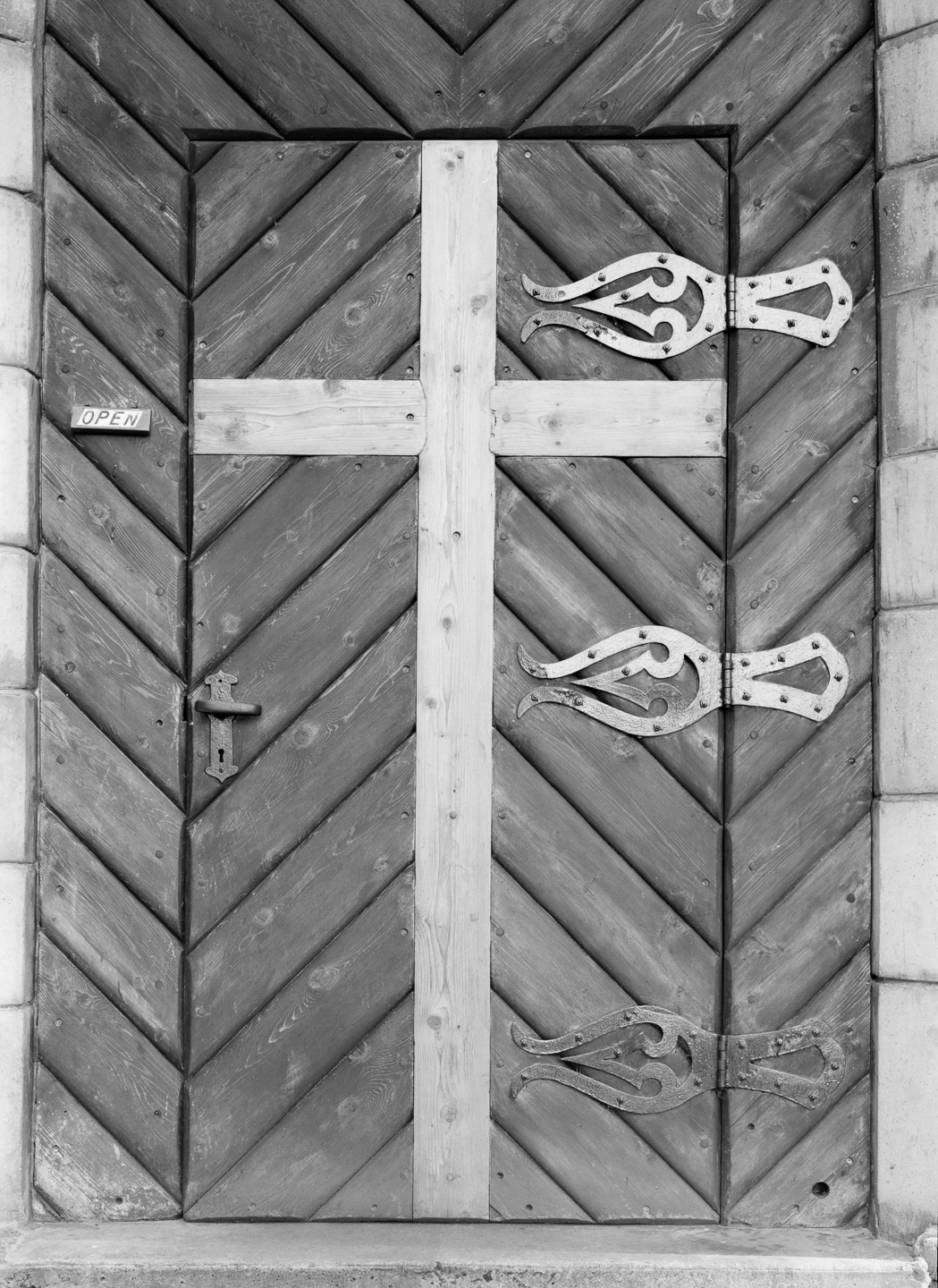
Original film negative after scanning and processing in Lightroom

From Negatives Week
The five images this week all started as 6x9cm b/w film negatives. These were scanned using a flatbed scanner and recently processed using Lightroom only. Some convert better than others. Some are indistinguishable from modern digital captures. Mining those old analog images offers more useful results than we might guess.
What I saw that I liked:
There was a glow to the door of this church in Alaska.
What I don't like in the picture:
The straight scan and print seen above is not glowing. It's not even white. The door is gray; the cross is gray, the hinges are gray. Not good.
What I learned:
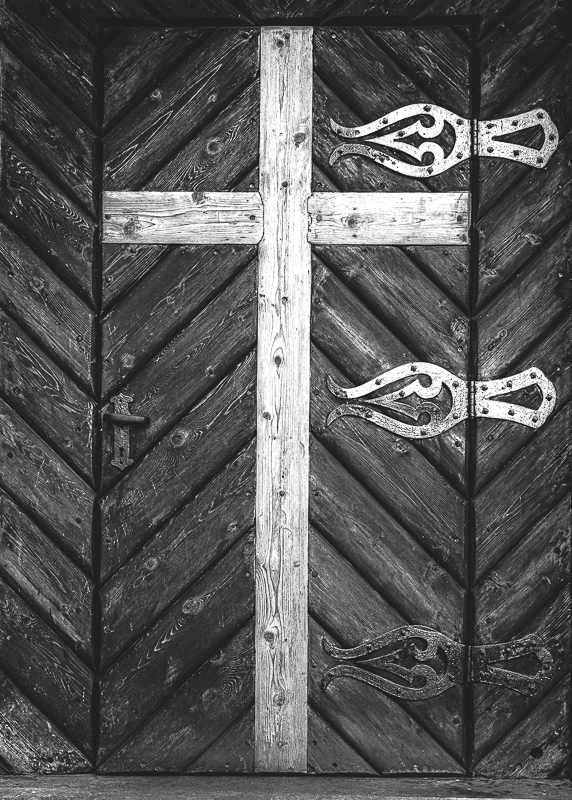
Here is an example of how the power of digital processing can salvage an image. After a couple hours work on this one, I was able to use a dozen masks and processing steps to create the image at left. Much closer to my original vision. Not a super winner, but much better than the original rendition above. |
|