Every Picture Is a Compromise
Lessons from the Also-rans
Most photography websites show the photographer's very best work. Wonderful. But that's not the full story of a creative life. If we want to learn, we'd better pay attention to the images that aren't "greatest hits" and see what lessons they have to offer. Every picture is a compromise — the sum of its parts, optical, technical, visual, emotional, and even cosmic – well, maybe not cosmic, but sometimes spiritual. Success on all fronts is rare. It's ok to learn from those that are not our best.
This is a series about my also-rans, some of which I've been able to improve at bit (i.e., "best effort"), none of which I would consider my best. With each there are lessons worth sharing, so I will.
Previous image | Next image |
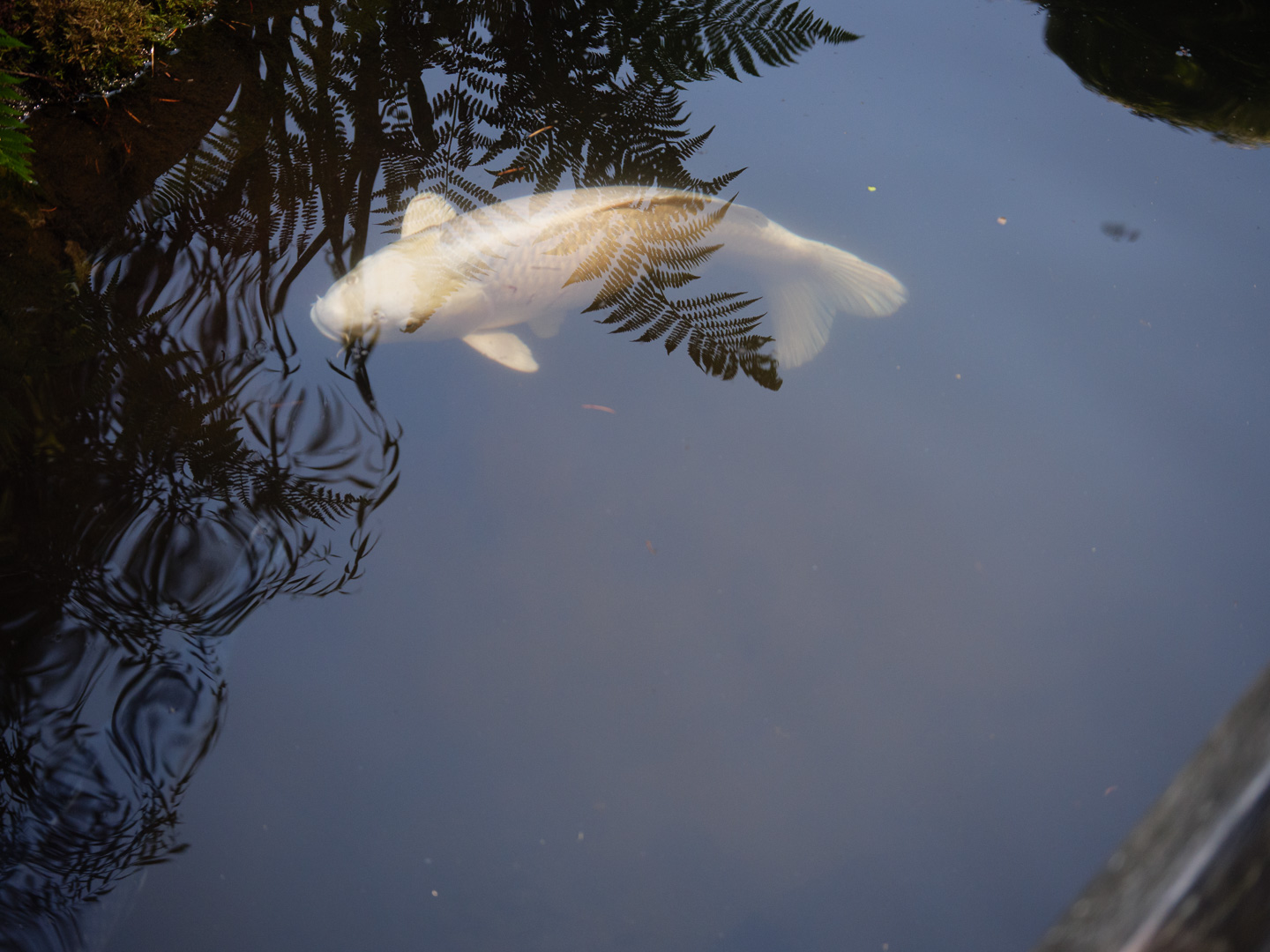
Original digital capture
Reasons to Crop an Image #5
Recover a poorly composed image
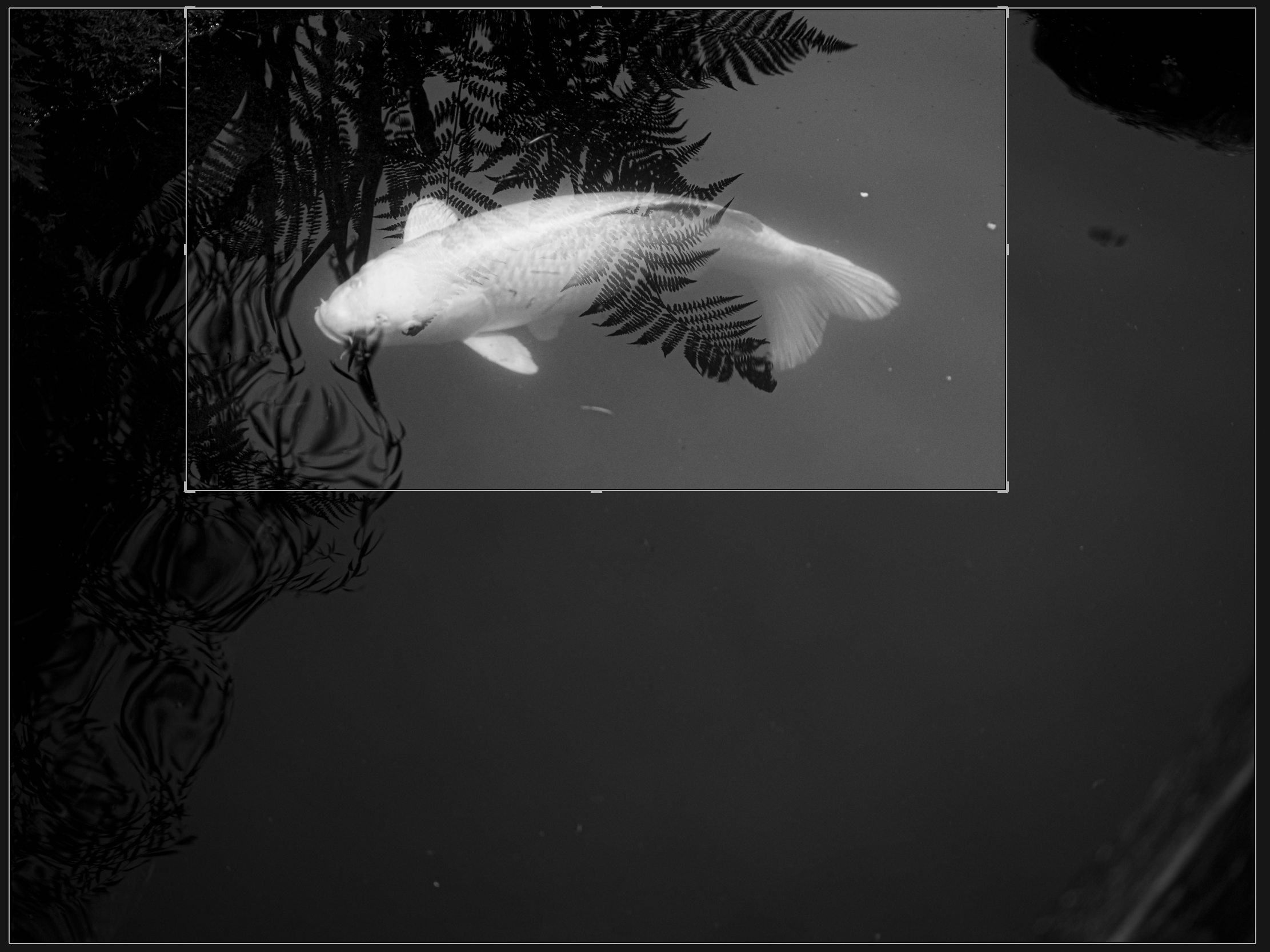
There are those who insist that cropping is a cheat for not composing accurately in the camera. I disagree. Never feel guilty about cropping if it makes the picture better. This week will offer examples.
What I saw that I liked:
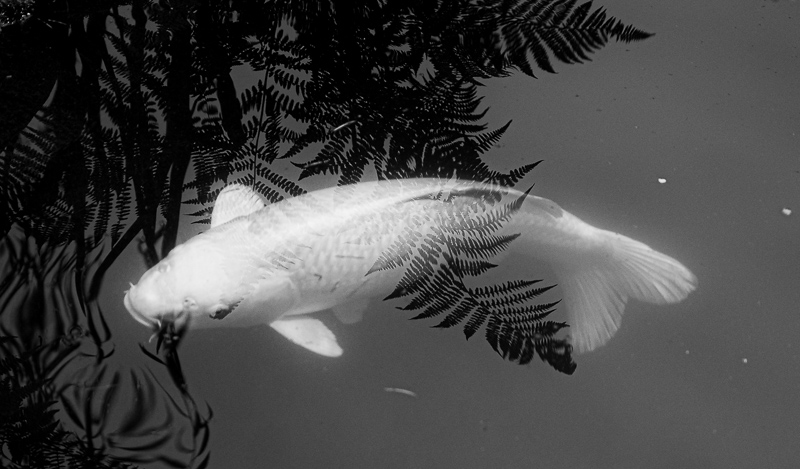
I love the way the reflections of the ferns look like they are drawn on the koi.
What I don't like in the picture:
I doubt any of us would willingly admit it, but there are times when we all just shoot and hope for luck to help out. Spray and pray, as they say. When I saw this white koi rising to the surface, I held my camera out at arms length, pointed the lens toward the fish and fired away.
What I learned:
The above RAW capture is 20 megapixels, 5184x3888 pixels. It's amazing how much we can crop out and still have enough resolution to make a good print. Even with this extreme crop (3417x1966) there are enough pixels to comfortably make an 11" print. |
|