Every Picture Is a Compromise
Lessons from the Also-rans
Most photography websites show the photographer's very best work. Wonderful. But that's not the full story of a creative life. If we want to learn, we'd better pay attention to the images that aren't "greatest hits" and see what lessons they have to offer. Every picture is a compromise — the sum of its parts, optical, technical, visual, emotional, and even cosmic – well, maybe not cosmic, but sometimes spiritual. Success on all fronts is rare. It's ok to learn from those that are not our best.
This is a series about my also-rans, some of which I've been able to improve at bit (i.e., "best effort"), none of which I would consider my best. With each there are lessons worth sharing, so I will.
Previous image | Next image |
Original digital capture
Sometimes, Just Fix the Obvious
In an ideal world, the image captured in the camera would be perfect and need no processing whatsoever. We do not live in an ideal world. Sometimes, the first step is to fix the obvious.
What I saw that I liked:
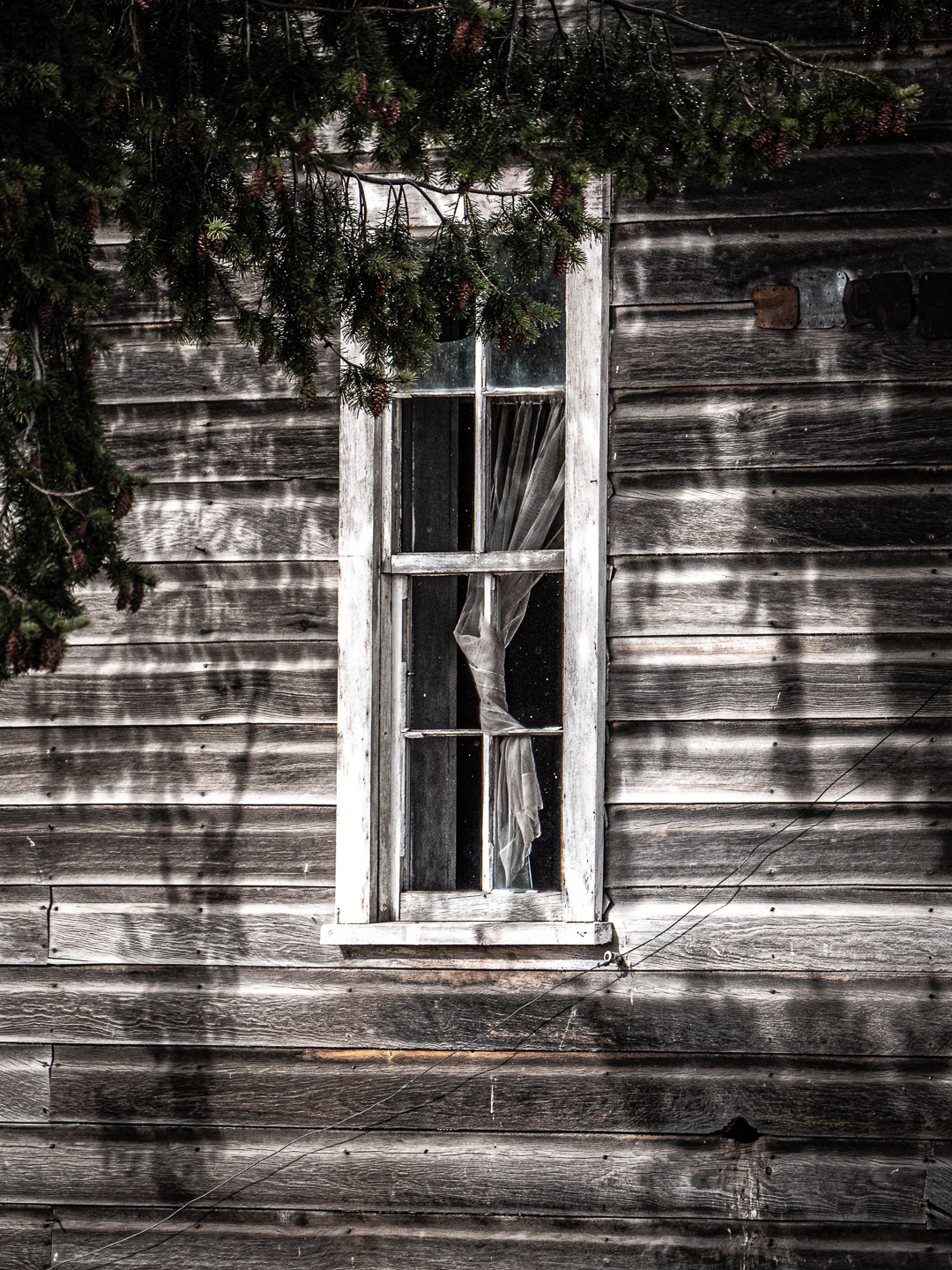
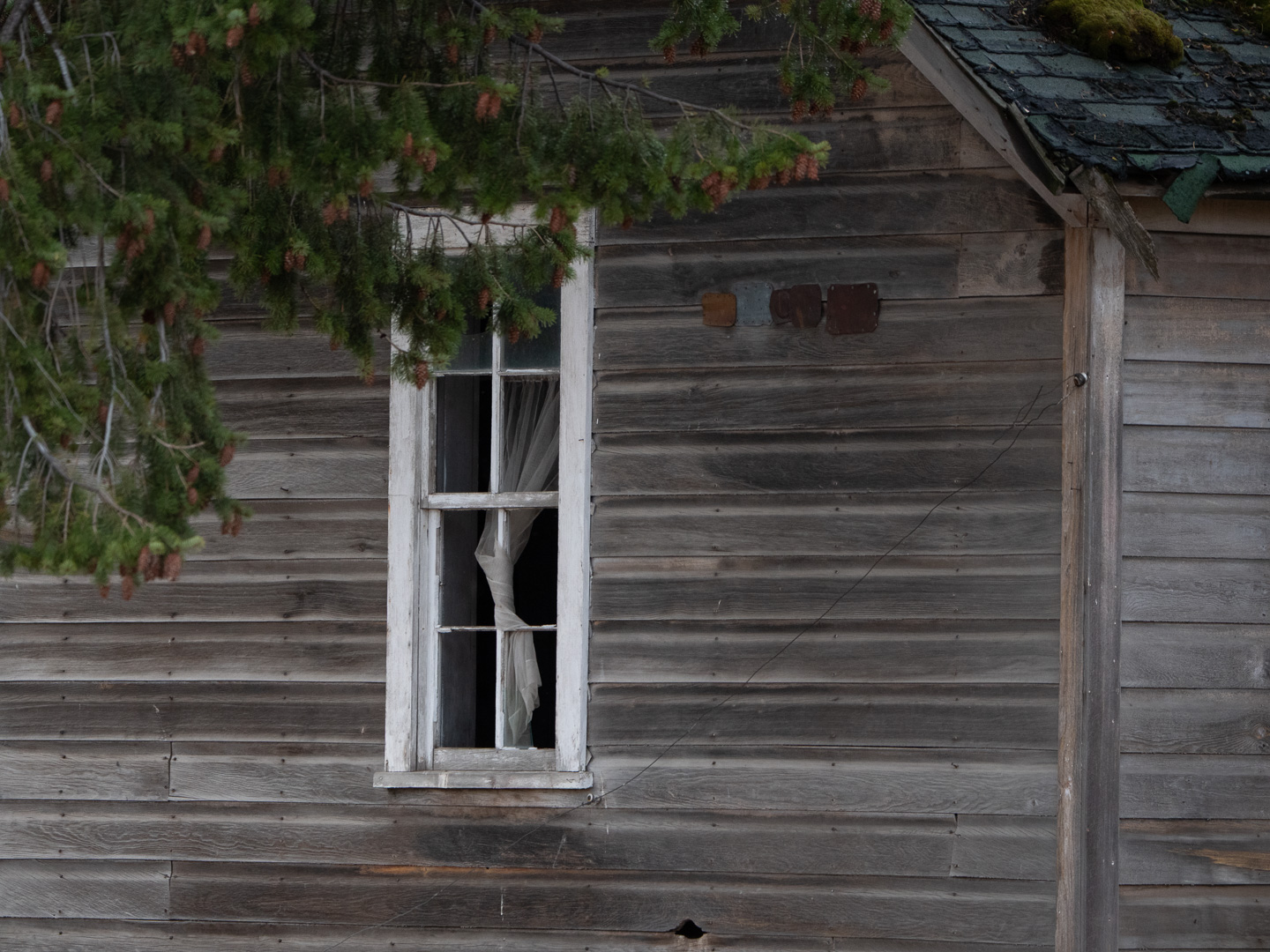
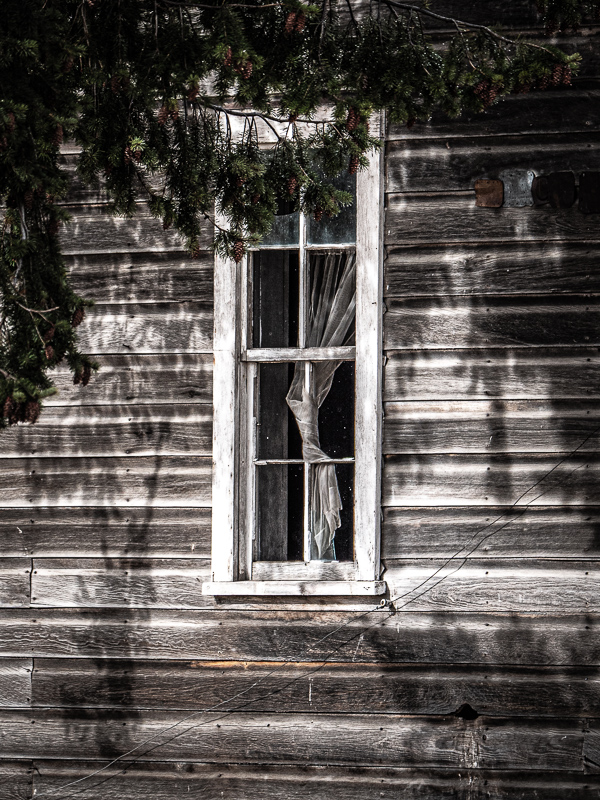
Nice window with shadows from the tree and that twisted curtain inside the window.
What I don't like in the picture:
For some reason I cannot now fathom, I thought it was important to the composition to include the corner of the building along the right edge. Obviously, I was wrong about that.
What I learned:
There are two steps in making a photograph. First, we need to recognize that a photograph can be made here. Second, we need to compose the shot and get the best usable exposure. With this location, I succeeded in step one, but failed pretty miserably with step two. Fortunately, the road came to a dead end about half a mile farther and I had to turn around and retrace my step. The clouds had shifted to make these lovely shadows and I was a little more judicious in my composition. Thank the Photo Gods for dead end roads. |
|