Every Picture Is a Compromise
Lessons from the Also-rans
Most photography websites show the photographer's very best work. Wonderful. But that's not the full story of a creative life. If we want to learn, we'd better pay attention to the images that aren't "greatest hits" and see what lessons they have to offer. Every picture is a compromise — the sum of its parts, optical, technical, visual, emotional, and even cosmic – well, maybe not cosmic, but sometimes spiritual. Success on all fronts is rare. It's ok to learn from those that are not our best.
This is a series about my also-rans, some of which I've been able to improve at bit (i.e., "best effort"), none of which I would consider my best. With each there are lessons worth sharing, so I will.
Previous image | Next image |
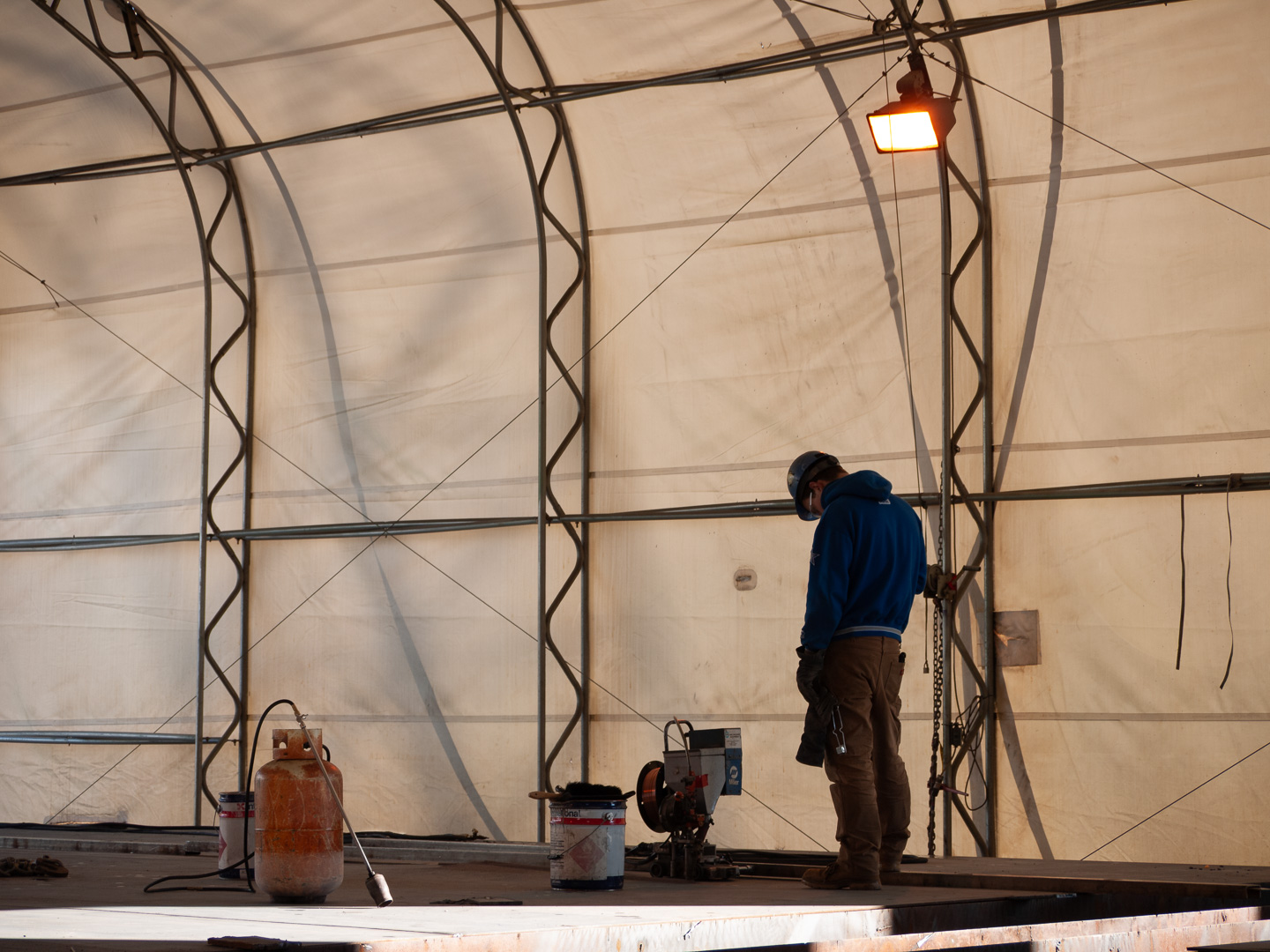
Original digital capture
More fun with Film Noir
Last week was Film Noir week. I had so much fun processing images for that film noir look that I have another five for this week. I'm starting to think about how to string these together with text or voice over to tell a hard-boiled story. Now I just need to practice my Humphrey Bogart delivery.
What I saw that I liked:
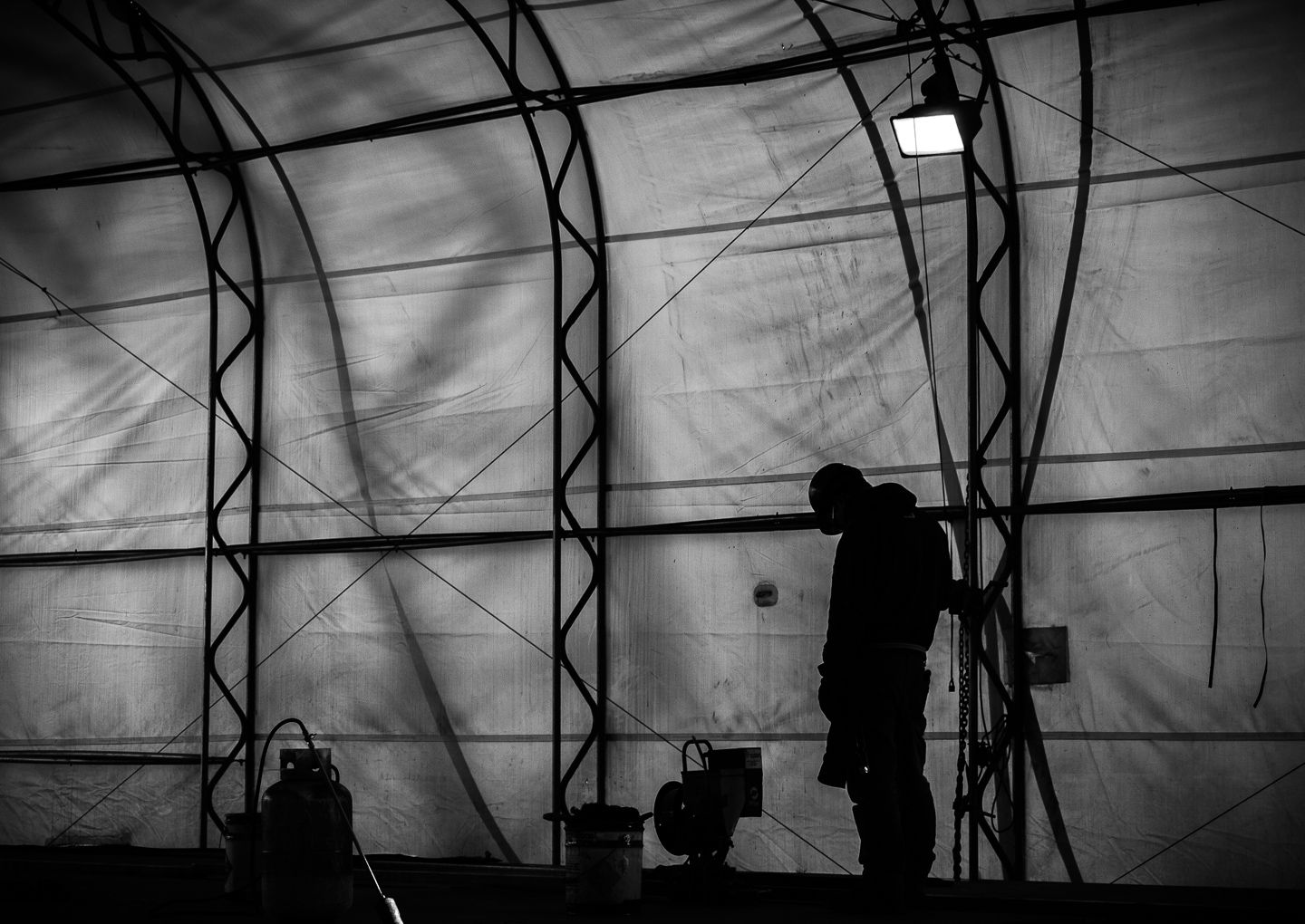
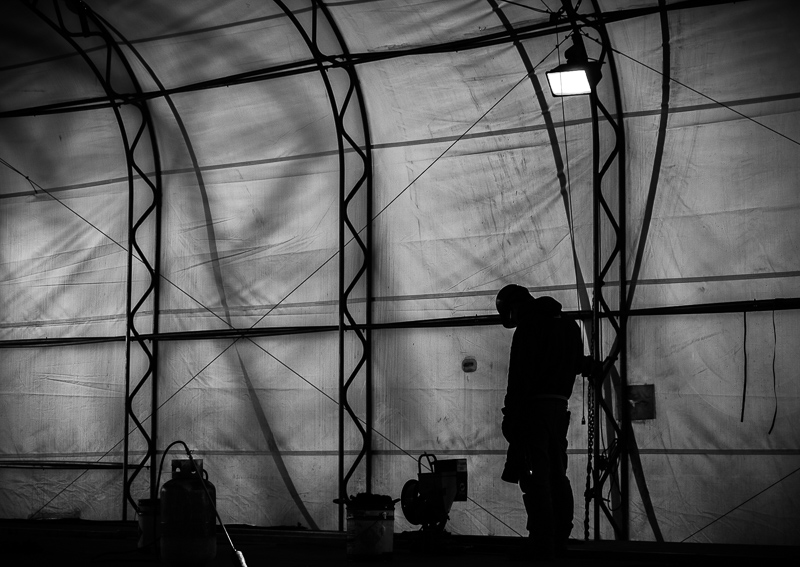
I don't think I've ever seen a Film Noir picture that doesn't have at least one silhouetted person in the film, somewhere.
What I don't like in the picture:
This is from inside a welding tent, but I wanted the fabric to look like a cement tunnel. Not sure I have the perfect tones for that yet.
What I learned:
The key to this image is the white light above the figure. Film Noir doesn't hesitate to use a pure white light source somewhere in the compositional frame. That key white gives life to all the other tones that make them have that film noir look rather than appearing poorly photographed by underexposure. |
|