Every Picture Is a Compromise
Lessons from the Also-rans
Most photography websites show the photographer's very best work. Wonderful. But that's not the full story of a creative life. If we want to learn, we'd better pay attention to the images that aren't "greatest hits" and see what lessons they have to offer. Every picture is a compromise — the sum of its parts, optical, technical, visual, emotional, and even cosmic – well, maybe not cosmic, but sometimes spiritual. Success on all fronts is rare. It's ok to learn from those that are not our best.
This is a series about my also-rans, some of which I've been able to improve at bit (i.e., "best effort"), none of which I would consider my best. With each there are lessons worth sharing, so I will.
Previous image | Next image |
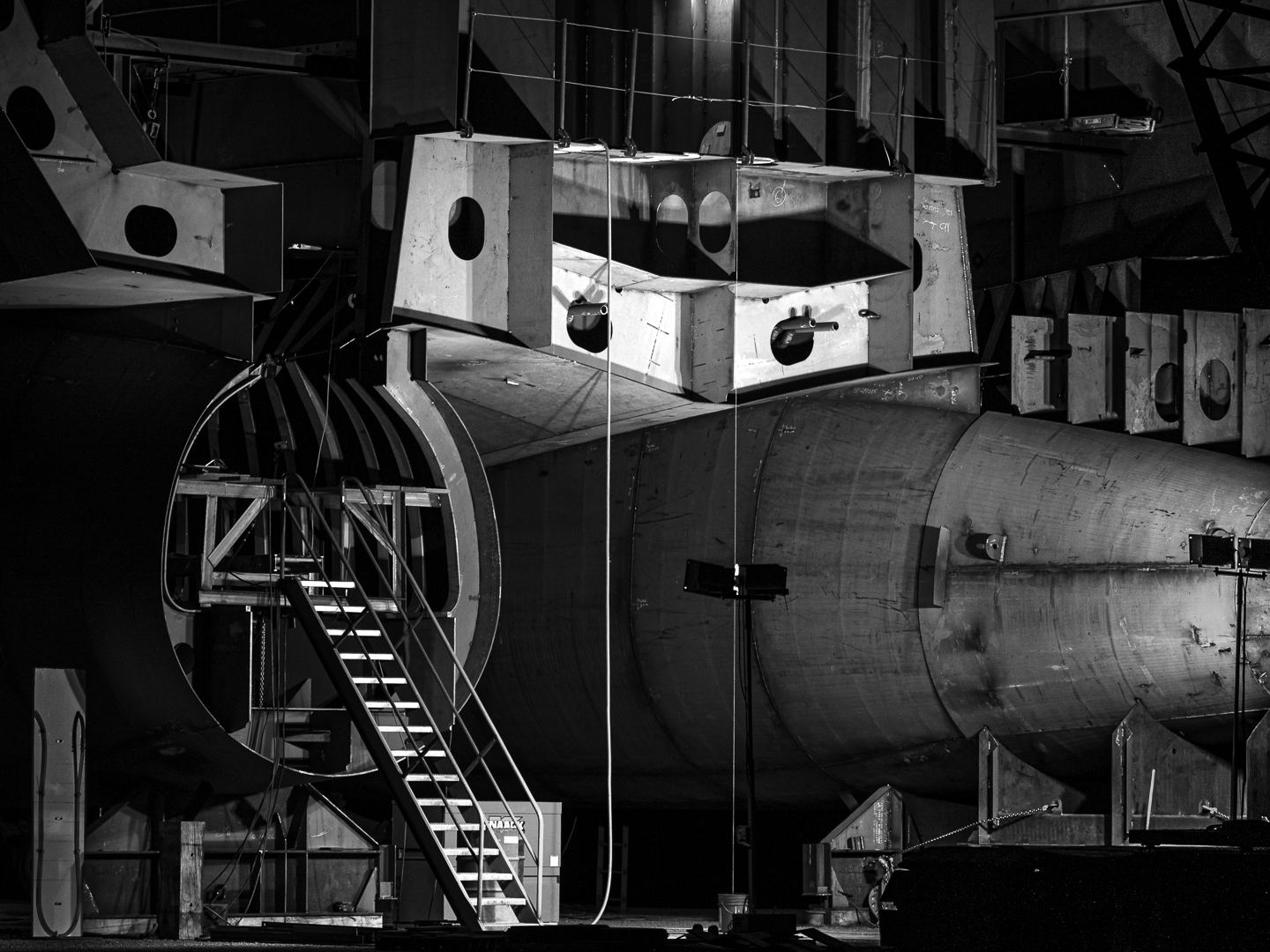
Original digital capture
Film Noir Week
Film Noir is as much an aesthetic as it is a style of storytelling. I've recently been watching a lot of Film noir movies from the 1940s and decided to try my hand at creating noir images from my work in the Dakota Creek shipyard that was across the street from our LensWork offices in Anacortes, Washington. I love the mystery and tension of these noir images. All they need is Humphrey Bogart chasing a bad guy through the shadows.
What I saw that I liked:
That b/w film noir look always seems to have highlights where you don't expect them to be. This is a night shot, all illuminated by flood lights.
What I don't like in the picture:
This was the first image I thought of when it occurred to me to experiment with a film noir aesthetic applied to my photographs of the shipyard. This one in particular seems to be built for a chase seen with lots of gun shots and fedora hats flying.
What I learned:
Film noir relies on deep contrast that buries the darkest shadows while allowing some mid-tone grays. The whites are just as critical. I could easily see this as a movie set location. |
|