Every Picture Is a Compromise
Lessons from the Also-rans
Most photography websites show the photographer's very best work. Wonderful. But that's not the full story of a creative life. If we want to learn, we'd better pay attention to the images that aren't "greatest hits" and see what lessons they have to offer. Every picture is a compromise — the sum of its parts, optical, technical, visual, emotional, and even cosmic – well, maybe not cosmic, but sometimes spiritual. Success on all fronts is rare. It's ok to learn from those that are not our best.
This is a series about my also-rans, some of which I've been able to improve at bit (i.e., "best effort"), none of which I would consider my best. With each there are lessons worth sharing, so I will.

Previous image | Next image |
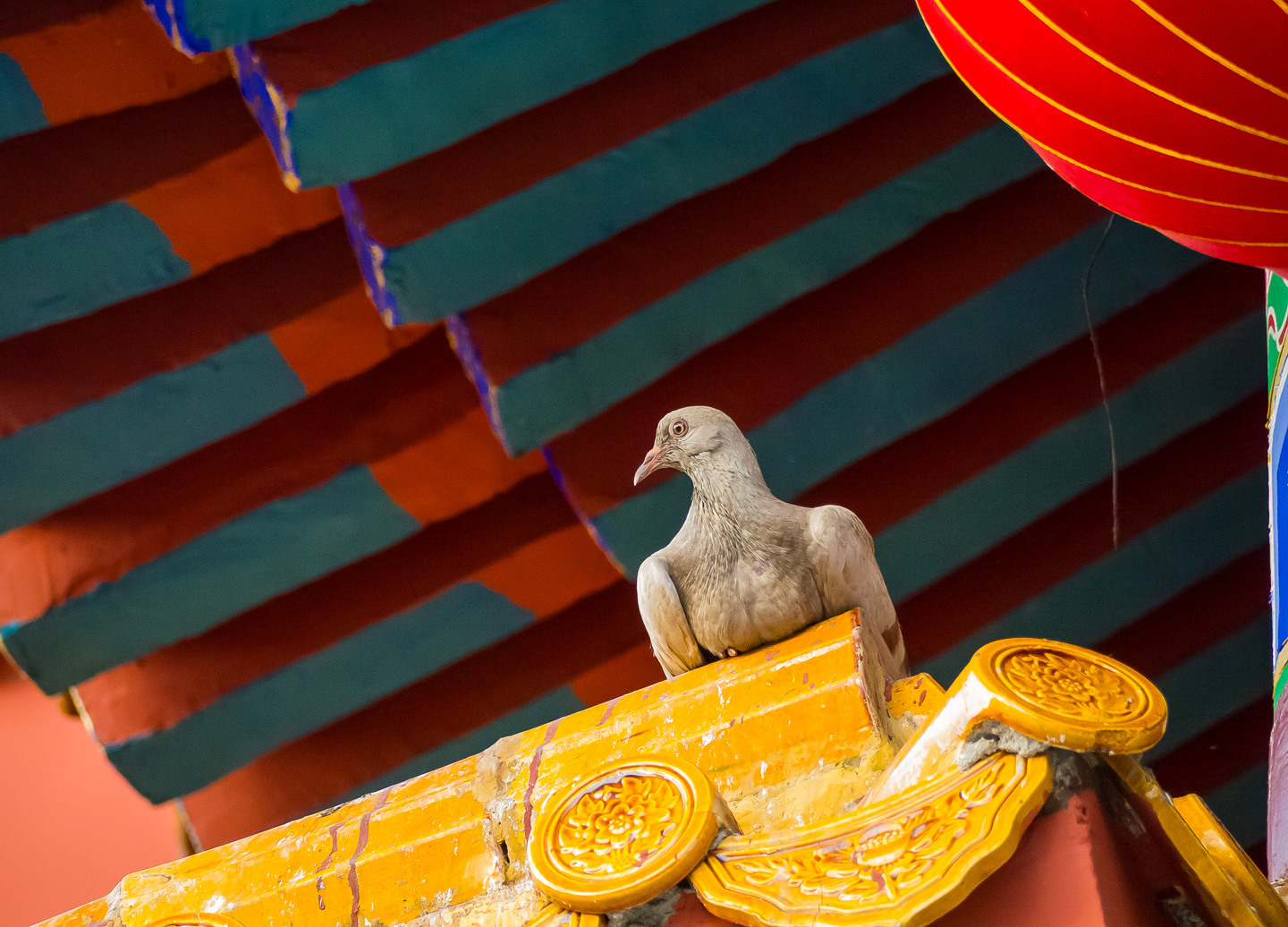
Original digital capture
Color Can Be a Distraction Week
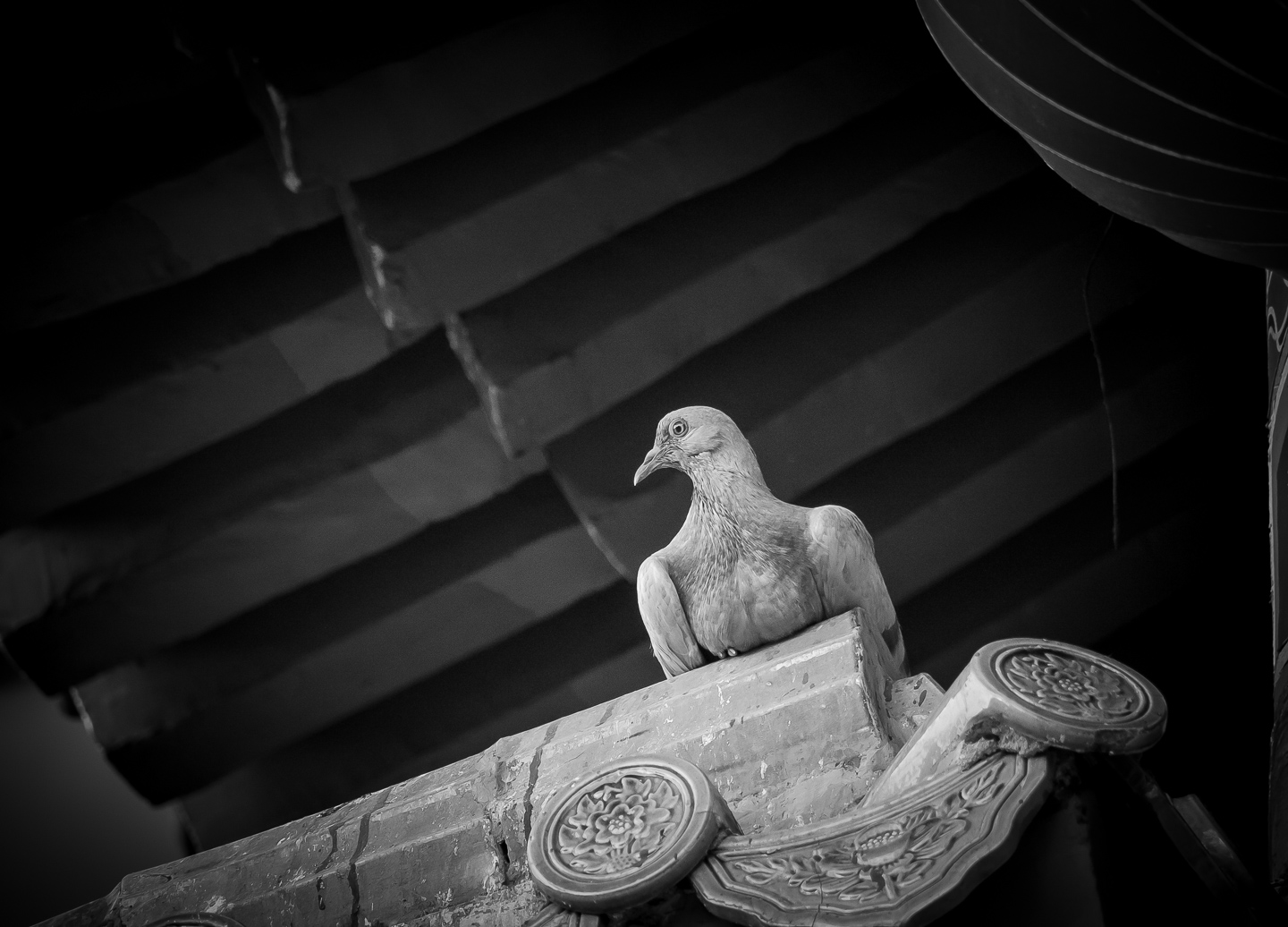
Sometimes the color of the subject is the reason we pick up the camera. We should be aware, however, that sometimes color can pull our attention in ways we don't want it to. Converting to b/w as the potential to pull our attention back to the true subject of the image.
What I saw that I liked:
Chinese temples are often painted in very rich and intense colors. They become very photogenic.
What I don't like in the picture:
In the scene above, I wasn't drawn to photograph the colors, bur rather the pigeon. That yellow color sucks our attention away from the bird I wanted to be the subject of the shot.
What I learned:
A quick conversion to b/w and then darkening the yellows a bit with the Color Mixer slider and the attention is not fully back on the bird.
2nd Chances: What I might try next
Curiously enough, the conversion to b/w also brings our the carved designs in the round ends of the support beams. To my eye, this emphasizes the Chinese nature of the subject. |
|